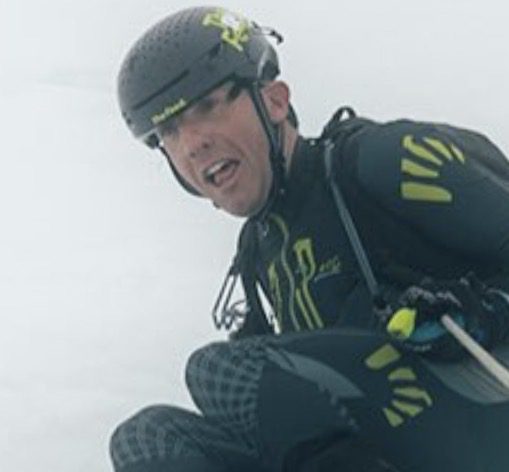
I have been to Arreches Beaufort before. I just had no clue I had. When Amund Jansen and I drove my car up the final twisting road to the small French ski village that hosts the world’s biggest ski mountaineering race, La Pierra Menta, yesterday, Amund told me that this exact road was part of the iconic Tour de France (TDF) climb, Col de Pré. I had ridden it some 7 months ago in the TDF, and I had no recollection of doing so.
Doing this calendar has made me realize how much I missed out on in the past 10 years as a bike racer. I have had people give me bottles of wine from regions in France that I have raced in, of which I had no clue I had crossed through. When you do a TDF, your life revolves around the bus, the bike race, the food truck, and the 15-20 odd 90 cm wide mattresses that you sleep on in predominantly forgettable hotels.
Cycling, in the modern era, can often be a lonely sport. If you go on the team bus of most World Tour teams during a transfer, most riders, directors, and staff aren’t chatting. They have their Bose over-the-ear headphones on, their iPads, iPhones, or computers out, and Netflix is in abundance. The chaos of the previous 4-6 hours and the intense pressure require a bit of escapism, and this leaves riders rarely connected with where they actually are. Cycling wasn’t always like this. I remember talking to Juan Manuel Garate, my first World Tour director and a guy who did 26 Grand Tours, telling me that in the 90s, pre-smartphones, when he did his first Grand Tour, guys would come back to the hotel, throw their bags in the room, and then go check out what was going on in the town. Riders ate whatever food the chef at the hotel cooked up, and everybody involved in the sport felt far more connected to the region that they were racing in.
Skimo, I have come to realize, in so many ways, is like cycling was 30 years ago. From gear, clothing, mentality, and experience, the sport is decades behind cycling, but as I sit here writing this, on a 90 cm mattress in a hotel I will remember, I am finding it is what I am loving most about this sport.
Yesterday, Amund and I arrived in the village of Arreches Beaufort. The night before, we slept in an innocuous hotel in Grenoble. As we crammed into the musty room, we looked at each other and both laughed. “This feels exactly like we are doing a bike race,” said Amund. However, from the moment we parked our car in the small village, the experience of being at Pierra Menta felt completely different.
Arreches is a far cry from the iconic French alpine towns of Courchevel, Chamonix, and Megève. The town isn’t known for its glamorous resorts or thumping après-ski scene. It is known for one thing, and one thing only: La Pierra Menta. With no frills, no superfluous crap, just big mountains and a vast trail network, it is a haven for people simply looking to get stuck into the mountains. Many of the hotels, buildings, and houses are old and tired—skinning up a mountain or doing a trail run is hard to monetize, and aside from spending money on their boots, ski mountaineers are notoriously cheap—but the village, like most small French towns, has charm. The bakery serves up the best chocolatine a 1.50 euro can buy, iconic images of long lines of skimo racers traversing white-capped peaks are plastered on old barns and buildings, and the only proper ski shop in town likely has more skimo boot options than most of Northeast America.
“You know, this year’s edition is the long course World Championships of Skimo,” Amund said to me as we munched on sandwiches purchased at the lone bakery in town. I had no idea. Not only had I never used a crampon or a carabiner before, but I had only found out about Pierra Menta a year earlier when I was fantasizing about this calendar and Googled “what is the biggest skimo race in the world.”
From our arrival, Amund and I, as men who had just been cruising around on a team bus only months ago, have felt like massive imposters. “Ah, you are from Canada; you must know Marc Antoine,” said a Czech woman sitting close to us in the bakery. She had come simply to watch the event and correctly assumed that we were racing, but she incorrectly assumed that, the sport being so small and this being the World Champs, I would know a high-level skier from my own country.
There is a level of authenticity in ski mountaineering that is far more genuine than in many other sports I have competed in. Skimo is too complicated, too hard, and too technical to just waltz into. There is no big fame or money—one of the favorites for this week’s race, William Bon Mardion, runs a small food hut in town, and the prize purse for the sport’s biggest race is 2000 euros. Competition, particularly because it is often a two-person team sport, is less about beating others and more about the act of actually conquering a mountain. Therefore, unlike a bike race, where often you feel as though every competitor is staring you down and looking for some type of weakness, ski mountaineers are just stoked to see somebody else who has been bitten by the bug. This purity immediately surrounded us, and although having just completed stage 1 of the race and still feeling wildly out of place, we certainly feel welcome.
Between buying new waxes, carabiners, and equipment at the ski shop, having dinner with another team simply because the table was open, and doing a pre-race ski with Joe Dombrowski (my former teammate and another retired cyclist who has fallen in love with the sport) and some locals, the athletes, volunteers, and organizers have been eager to answer any and all of our ridiculous questions. This, we found out today, is because Pierra Menta is freaking crazy.
There was a moment today when I stood at the top of this couloir, staring down an icy face that was, at points, over 45 degrees, and I thought, “How did they let me into this thing?”
Having never done a Pierra Menta and this being only our second skimo race, Amund and I were very lucky to have received an entry; however, due to our level of experience, it meant we started the race in wave 5 of 6, some 25 minutes after the pre-race favorites. The wave in which we started was a mixed bag of nuts, and from the beginning, we showed why we belonged in this group. The start of the race began with a 200m climb, straight into a 400m downhill. Amund and I got out of the gates first, won the whole shot, and then proceeded to lose all that we gained in our first transition. I then crashed because I couldn’t get my boot binding to close, and we quickly went from the front to the back. Both possessing VO2 maxes likely far superior to the majority of the skiers immediately in front of us, we proceeded to blow past people, only to lose all that we gained in the next transition, a transition to crampons.
Until a month ago, I only knew about crampons because I love watching mountaineering documentaries where something goes wrong. Therefore, my association with them is some guy losing fingers because he had to overnight on K2. Never had I thought that a crampon would enter my repertoire of sports equipment. However, it is mandatory to have crampons at Pierra Menta, and on stage 1 of the race, we had to use them four times. If I am honest, I never practiced with crampons prior to this race because the idea of needing to use them scared me. I wasn’t really interested in going into terrain that justified using blades on the bottoms of my feet in order to not die. But, I signed up for this, and there Amund and I found ourselves fumbling with crampons as other racers sped past. However, once I got the things on, the crampon segments of today’s stage were where I felt most comfortable, which in reality doesn’t say much.
Everything about the 3 hours and 47 minutes of racing that Amund and I did on the 20 km, 2600 m of vertical, first stage of Pierra Menta felt unnatural. We bootpacked up couloirs and on ridges that I would have only hours earlier thought impossible. We skied on ridiculous terrain in terrible visibility and “skied” (I say “skied” in quotations because it was basically sliding on our edges, praying that they wouldn’t slip) down what was effectively an icy wall. On said wall, a rope had generously been drilled into the cliff face, and I just skied towards it, grabbed it, and repeated in my head “arrive alive, arrive alive.”
At one point, while bootpacking up an incredibly steep couloir, I saw a snowball the size of a water cooler hurtle down just to my right and thought, if that connected with me or any of the other skiers above, we would all be toast. The first stage of this race was nuts, and when Amund and I finished, over an hour and 10 minutes behind the race winner, I felt a mixture of pride, fatigue, and fear that I still had three days left.
Fortunately, as we hung out in the ski room after dinner tonight, checking if our boots were dry and asking waxing questions to a few Americans, one of them turned to us and said, “I have done Pierra Menta four times, and today was definitely the most technical day I have had.” I pray he wasn’t lying. Up tomorrow; 27km, 3000m and, we have been told, no crampons needed.